U.S. Treasury2026-10-06 17:30:37U.S. Treasury acknowledges lawful uses for Bitcoin and crypto mixersTechub News, citing Crypto Briefing, reported that the U.S. Treasury has acknowledged that Bitcoin and crypto mixing services have legitimate uses. The note is brief, but its policy significance is clear: the position could shape how future privacy rules are drafted in the United States. At the center of that debate is a familiar tension in crypto policy. Regulators and lawmakers are trying to weigh financial privacy concerns against anti-money laundering obligations, and the Treasury’s recognition of lawful use cases adds an important point to that discussion. The report does not provide added detail on specific rulemaking steps, agencies, or timelines. Even so, the statement stands out because it frames Bitcoin and mixers not only through an enforcement lens, but also as tools that can serve legal purposes depending on context. That distinction may matter as U.S. officials continue to debate the limits of privacy-preserving technologies in digital asset markets.160
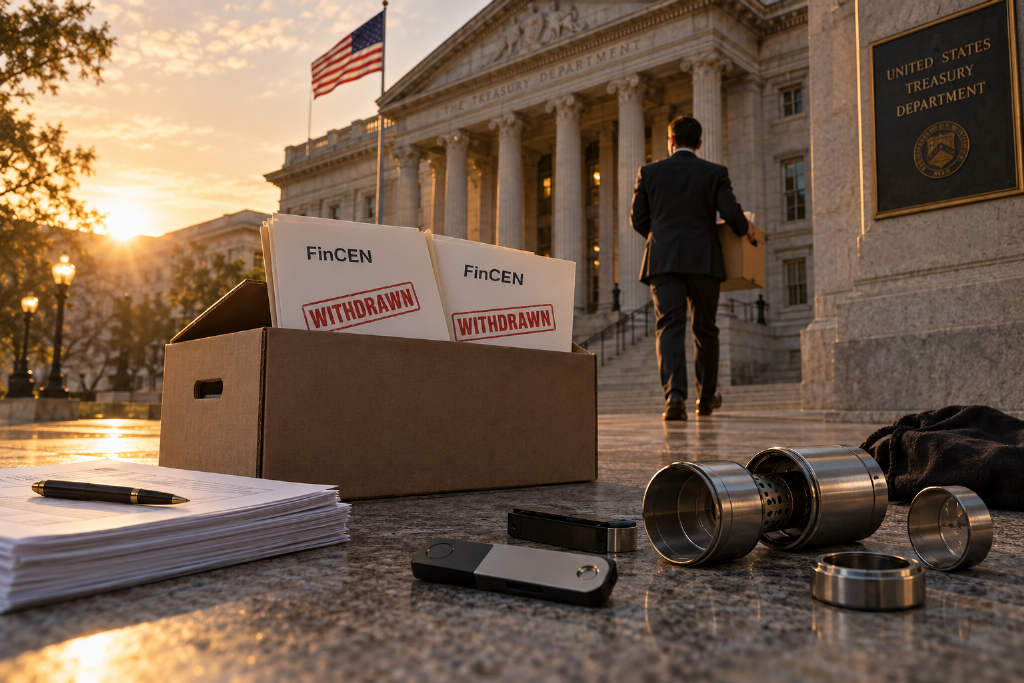
US Treasury2026-10-05 13:24:55US Treasury withdraws proposed monitoring rules for unhosted wallets and crypto mixingThe US Treasury Department has withdrawn two long-pending cryptocurrency rule proposals tied to so-called unhosted wallets and convertible virtual currency, or CVC, mixing, according to a Coin Center post published on Oct. 5. One proposal would have required financial institutions to collect and retain counterparty information for transactions involving unhosted wallets when the amount exceeded $3,000. Transactions of more than $10,000 would also have triggered a reporting requirement to the Financial Crimes Enforcement Network, or FinCEN. Coin Center said both proposals threatened to sharply expand financial surveillance over crypto users and had remained a latent policy risk as long as they stayed pending. The group described the formal withdrawal as a major win for financial privacy. Coin Center, founded in Washington, D.C. in 2014 by Jerry Brito and Robin Weisman, is one of the city’s earliest crypto policy think tanks and says its mission is to defend the right to build and use open cryptocurrency networks.340
Hester Peirce2026-09-30 01:48:44Hester Peirce says developer protection and financial privacy remain unfinished SEC crypto workOutgoing U.S. Securities and Exchange Commission Commissioner Hester Peirce used a farewell interview with The Block to look back on nearly a decade of crypto regulation at the agency, arguing that the SEC moved too slowly to write workable rules and spent too much time fighting avoidable enforcement battles. Peirce said two issues remain unfinished in her view: protecting developers who merely build tools, and restoring stronger financial privacy protections for ordinary people. She argued that software developers should not be held liable when others misuse open tools, especially in decentralized systems where smart contracts can be called by anyone after deployment. On privacy, she said the U.S. has become overly reliant on financial data for criminal investigations and that blockchain-based privacy tools should not be treated only as instruments for wrongdoing. Peirce also drew a line between projects that still rely on intermediaries and genuinely peer-to-protocol activity, saying the former should be regulated like other intermediaries while the latter may require a different framework. Although she said she still hopes the Clarity Act can pass, she added that the SEC already has enough authority to issue rules before legislation arrives. After leaving the SEC, Peirce will join Regent University School of Law as an associate professor teaching securities law and writing.340
Michael Saylo2026-09-27 01:15:00Michael Saylor lays out digital asset policy agenda centered on AI, Bitcoin and financial market reformStrategy founder Michael Saylor used a lengthy essay and remarks tied to the Bitcoin Policy Institute’s Freedom Tech DC summit to argue that the rise of AI calls for a broad redesign of financial rules. His central proposal is a "digital bill of rights" that would give individuals and businesses the right to create, issue, custody, transfer and use digital assets. From that starting point, Saylor links digital asset policy to capital formation, dollar competition, Bitcoin banking, tokenized securities, privacy protections, portable KYC credentials, tax treatment for everyday payments and infrastructure that AI agents can use directly. He argues that higher productivity from digital intelligence will require better money and better capital markets, and says policy should lower the cost and complexity of starting and financing new companies. He calls for practical issuance rules for tokens, broader competition around digital dollars, workable paths for banks and insurers to handle Bitcoin, and a rethink of capital rules such as the Basel treatment of certain crypto exposures. He also says outdated reporting thresholds and repetitive compliance checks raise costs and weaken privacy. Saylor names the SEC, CFTC, U.S. Treasury and the White House as the most promising channels for near-term action, while criticizing the path taken by the CLARITY Act for putting too much weight on restrictions. He closes by saying digital assets could become a $100 trillion industry if policy expands, rather than narrows, what people and companies are allowed to do.420
Stealf2026-09-15 06:31:42Stealf says STEALF token will list on Meteora on Sept. 15Stealf, a financial privacy layer built on Solana, said it is launching its token, STEALF. In a post on X, the project said the token is set to go live on Sept. 15 on Meteora, a liquidity protocol in the Solana ecosystem. The announcement came from Stealf’s official account and only covered the planned listing. No additional details on the token were disclosed in the post provided here, including supply, trading mechanics, or other launch terms. The update was cited by Foresight under the market analysis category.640
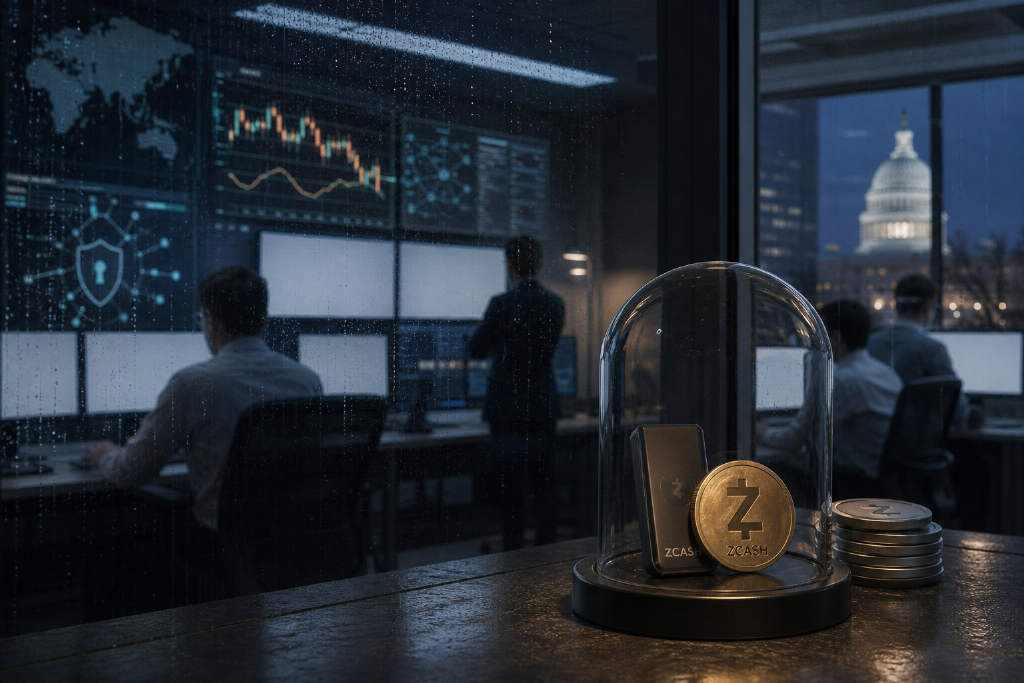
Zcash2026-08-24 10:32:12Grayscale Revalues Zcash as AI Raises the Price of Financial PrivacyGrayscale has put Zcash back on investors’ radar, arguing that stablecoins, public blockchains and AI tools are making financial activity easier to trace. The report does not frame ZEC as another short-term privacy coin trade. Instead, it asks whether privacy is becoming a core monetary feature again as digital finance grows more transparent. The firm says Zcash has improved its shielded transactions, wallets and mining infrastructure over the past decade, but adoption remains limited. Still, it points to usage data, including a high share of shielded transactions and a large amount of ZEC in the shielded pool, as evidence that privacy is already being used on-chain. Grayscale’s valuation exercise is simple: if ZEC were to capture 5% of the digital-currency segment, the token could imply a market value near $70 billion, or roughly 9 times its level in the report. That is not a target price, and it comes with major assumptions about supply, competition and the size of the broader market. The risks are just as important. Grayscale flags regulatory friction, protocol-security issues, quantum-computing concerns and execution risk. The report’s bottom line is that Zcash’s case depends less on price action and more on whether privacy becomes something users are willing to pay for again.1530
Grayscale Res2026-08-22 11:14:00Grayscale says AI-era financial surveillance could lift Zcash as privacy demand returnsGrayscale Research argues that financial privacy is moving back into focus as stablecoins and broader blockchain use spread and artificial intelligence creates new ways to monitor financial activity. In a report written by Michael Zhao and translated by Foresight News, the firm says Zcash stands out because it combines a Bitcoin-like monetary design with optional shielded transactions powered by zero-knowledge proofs. The report frames privacy as a core monetary function rather than a niche add-on. It reviews earlier periods when digitized records, the Bank Secrecy Act, internet banking, and the Patriot Act pushed privacy higher on the public agenda, then says the market may be approaching a third wave of attention. In Grayscale’s view, Zcash is one of the few networks designed at the base-layer level to protect sender, receiver, and amount data while still allowing transaction validity to be verified. The network also supports selective disclosure through viewing keys. Grayscale says ZEC accounts for roughly 0.4% of total crypto market capitalization and about 0.6% of the “currency” segment it tracks, despite what it describes as meaningful on-chain usage. As of July 20, shielded transactions made up about 90% of all Zcash transactions, while roughly 4.2 million ZEC, or 25% of circulating supply, sat in the shielded pool. The firm also highlights regulatory, cryptographic, quantum, and execution risks, including the limits of compliance acceptance for shielded transfers and the complexity of future upgrades such as Tachyon and Crosslink.1330
Grayscale2026-08-21 10:14:10Grayscale says Zcash could benefit if financial privacy is repriced in the AI eraGrayscale Research argues that financial privacy is moving back into focus as stablecoins and blockchain-based applications spread and artificial intelligence creates new tools for financial surveillance. In its report on Zcash, the firm says privacy should not be treated as a fringe feature of money, but as part of money’s core function. The report frames Zcash as a decentralized digital currency with a Bitcoin-like monetary design and an optional shielded transaction system that can hide sender, receiver, and amount while still allowing the network to verify validity. Grayscale says the market is assigning very little value to privacy today. As of July 2026, it places ZEC’s market capitalization at roughly $8 billion, or about 0.6% of its digital money category, which it says has a combined market value of $1.4 trillion across 15 assets. The report also points to on-chain usage metrics: shielded transactions accounted for about 90% of all Zcash transactions as of July 20, while about 4.2 million ZEC sat in the shielded pool, equal to 25% of circulating supply and a record high. Even so, the firm also flags regulatory, cryptographic, quantum, and execution risks tied to the network’s future development.1320